-
 Min. order: 100 piece
 -
 Min. order: 100 piece
 -
 Min. order: 100 piece
 -
 Min. order: 100 piece
 -
 Min. order: 100 piece
 -
 Min. order: 100 piece
 -
 Min. order: 100 piece
 -
 Min. order: 100 piece
 -
 Min. order: 100 piece
 -
 Min. order: 100 piece
 -
 Min. order: 100 piece
 -
 Min. order: 100 piece
 -
 Min. order: 100 piece
 -
 Min. order: 100 piece
 -
 Min. order: 100 piece
 -
 Min. order: 100 piece
 -
 Min. order: 100 piece
 -
 Min. order: 100 piece
 -
 Min. order: 100 piece
 -
 Min. order: 100 piece
 -
 Min. order: 100 piece
 -
 Min. order: 100 piece
 -
 Min. order: 100 piece

When envisioning a dream kitchen, the centerpiece is almost always the island—a sprawling surface that sets the tone for the entire home. In recent years, one material has risen above the rest to become the gold standard for luxury interiors: calacatta quartz countertops. Whether you are renovating a master bath or designing a chef’s kitchen, this material offers a compelling blend of old-world Italian aesthetics and cutting-edge durability.
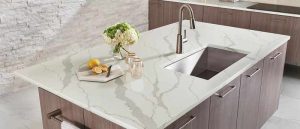
But with so many options on the market, how do you know if this investment is right for your property? This comprehensive guide explores the manufacturing, cost, maintenance, and design versatility of calacatta quartz countertops to help you make an informed decision.
The Engineering Behind the Beauty
To understand why this material is so sought after, we must first look at its composition. A common question among homeowners is: What is calacatta quartz made of?
Unlike quartzite or marble, which are sliced directly from quarry blocks, calacatta quartz countertops are an engineered stone. They are the result of a precise manufacturing process that combines approximately 90% to 93% crushed natural quartz aggregates with 7% to 10% polymer resins and pigments. The quartz provides incredible hardness—ranking a 7 on the Mohs hardness scale—while the high-quality resins act as a binding agent.
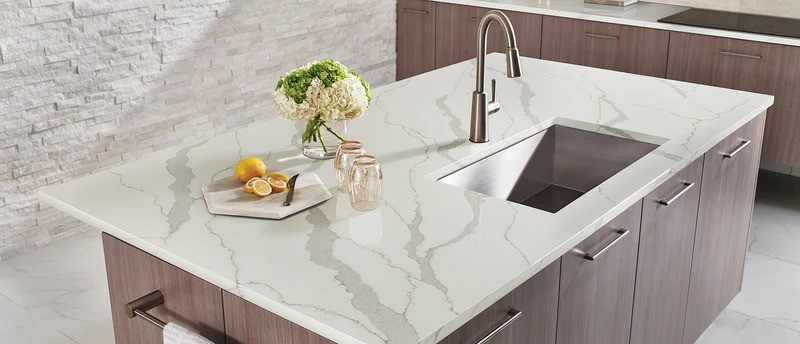
This engineered composition is what allows manufacturers to control the appearance of the slab. While nature is unpredictable, engineers can design calacatta quartz countertops to have a specific, highly desirable look: a pure, bright white background featuring bold, dramatic veining that mimics the rare Calacatta marble found in Carrara, Italy. The result is a surface that looks like natural stone but performs like a modern technological marvel.
Analyzing the Aesthetic: Trends and Variations
The visual impact of calacatta quartz countertops is undeniable. They are designed to be statement pieces. However, because they are so distinct, many people wonder about their longevity in design trends.
Is calacatta quartz too trendy?
It is a valid concern. You don’t want to install a permanent fixture that will look dated in five years. So, is calacatta quartz too trendy? The consensus among interior designers is that while it is currently popular, it is not a “fad.” The look is based on Calacatta marble, which has been used in architecture for centuries. By emulating a classic stone, calacatta quartz countertops bypass the cycle of fast trends. However, the styling is shifting. The ultra-thick, sharp veins of 2020 are softening slightly into warmer, more organic patterns for 2025.
What is the most popular Calacatta quartz color?
If you want to ensure resale value, sticking to proven favorites is smart. What is the most popular Calacatta quartz color? Currently, Calacatta Gold reigns supreme. This variation features a crisp white background with thick veins of grey and subtle ribbons of metallic gold or beige. This mix of warm and cool tones makes it incredibly versatile, allowing it to coordinate with stainless steel appliances as well as brass or gold cabinet hardware. Other variations like Calacatta Laza (known for “floating” veins) and Calacatta Classique remain strong contenders in the market.
The Financial Investment: Cost vs. Value
Budgeting for calacatta quartz countertops requires a shift in perspective. You are paying for a premium aesthetic.
Is calacatta quartz more expensive?
When comparing options, you will likely ask: Is calacatta quartz more expensive? Yes, it is typically priced higher than standard quartz options. Standard quartz often features uniform flecks or simple patterns that are easy to mass-produce. Calacatta quartz countertops, however, require complex “through-body” technology to ensure the veins look realistic and not just printed on top. This manufacturing difficulty drives the price up to anywhere from $60 to over $100 per square foot installed.
Which is more expensive, Carrara or Calacatta quartz?
Confusion often arises between these two Italian-inspired names. Which is more expensive, Carrara or Calacatta quartz? Almost without exception, Calacatta is more expensive.
-
Carrara Quartz: Designed to look like Carrara marble, which is greyish with soft, feathery, indistinct veins. This is a more common and “safer” look.
-
Calacatta Quartz: Designed to look like Calacatta marble, which is whiter with bold, striking, and architectural veins.
Because the bold look of Calacatta is more difficult to achieve and currently in higher demand, suppliers charge a premium for it.
Is quartz cheaper than granite?
The battle between natural and engineered stone is ongoing. Is quartz cheaper than granite? In the context of calacatta quartz countertops, the answer is usually no. While entry-level granite (often found in builder-grade homes) is cheaper, the high-end Calacatta designs are priced similarly to, or even higher than, premium granite slabs. You are not buying quartz to save money; you are buying it to save time on maintenance and for the specific white-marble aesthetic that granite simply cannot provide.
Which quartz brand is most expensive?
Not all slabs are created equal. Which quartz brand is most expensive? The market leaders—Cambria, Caesarstone, and Silestone—command the highest prices. Cambria is often cited as the luxury leader in the US market, offering massive slabs with incredibly high-definition prints and robust warranties. When you purchase calacatta quartz countertops from these brands, you are paying for quality assurance and brand prestige.
Durability and Functionality
The primary selling point of calacatta quartz countertops, aside from beauty, is their “install it and forget it” nature.
Why do people prefer quartz over granite?
Why do people prefer quartz over granite? It comes down to lifestyle. Granite is porous. If you spill red wine on unsealed granite, it can absorb the liquid and stain permanently. Calacatta quartz countertops are non-porous. They do not need to be sealed, ever. They resist bacteria, making them hygienic for families, and they are generally harder and less prone to chipping than natural stone.
Is calacatta a good quartz?
If you are wondering, “Is calacatta a good quartz?”, the answer is a resounding yes. The term “Calacatta” refers to the pattern, not the structural integrity. As long as you are buying from a reputable manufacturer, a slab with a Calacatta pattern has the same durability specs as any other high-quality quartz. It is resistant to scratches, stains, and impacts.
The Downsides: Managing Expectations
A professional review must be balanced. While calacatta quartz countertops are excellent, they are not indestructible.
What are the disadvantages of calacatta?
Homeowners should be aware of the limitations. What are the disadvantages of calacatta?
-
UV Sensitivity: You cannot use these countertops outdoors. Direct sunlight will react with the resin, causing the bright white background to turn yellow over time.
-
Seam Visibility: Because the veins in calacatta quartz countertops are so large and distinct, matching them at a seam (where two slabs meet) is very difficult. Poor installation can result in veins that dead-end abruptly.
-
Chemical Sensitivity: Strong chemicals can dull the surface.
-
Heat Resistance: This is the most common misconception.
Can I put a hot cup of coffee on quartz?
Can I put a hot cup of coffee on quartz? Yes, a standard mug of coffee is generally safe. However, quartz is heat resistant, not heat proof. The resin in the slab can sustain damage at temperatures exceeding 150°F-300°F depending on the brand. Placing a red-hot cast iron skillet directly on calacatta quartz countertops can cause thermal shock, leading to cracks or yellow scorch marks that are impossible to remove. Always use a trivet for cookware.
Maintenance and Care
Keeping your calacatta quartz countertops looking brand new is straightforward, but there are specific products to avoid.
Can you use Clorox wipes on quartz?
In the era of constant sanitization, many ask: Can you use Clorox wipes on quartz? The professional advice is no. Clorox wipes and similar disinfecting pads often contain citric acid and sodium hypochlorite (bleach). While a single use might not cause visible damage, repeated exposure can degrade the polymer bonds in the resin. This leads to a loss of sheen and can make the surface look dull or patchy.
To clean calacatta quartz countertops, simply use warm water and a mild dish soap. For stubborn grease, a non-abrasive sponge and a dedicated quartz cleaner are your best bets.
Design Ideas: Maximizing the Look
When you invest in calacatta quartz countertops, you want to show them off. Here are a few design strategies popular in high-end homes:
-
The Waterfall Edge: This involves continuing the countertop material down the side of the cabinet to the floor. With Calacatta patterns, the fabricator can match the veins so they appear to flow over the edge like a waterfall.
-
Full-Height Backsplash: Instead of subway tile, run the calacatta quartz countertops slab up the wall to the upper cabinets. This creates a dramatic, seamless look that makes small kitchens feel larger.
-
Contrast Cabinetry: The bright white background of Calacatta looks stunning against dark navy, charcoal, or forest green islands.
Conclusion: Is This Material Right For You?
Choosing calacatta quartz countertops is a decision to prioritize low maintenance without sacrificing high style. They offer the closest alternative to Italian marble available today, with structural benefits that natural stone cannot match.
While the price point is higher than standard surfaces, the value lies in its longevity. You will never have to pay for sealing services, and you are unlikely to ever need to repair chips or cracks. For the modern homeowner who wants a kitchen that looks like a magazine cover but functions like a workspace, calacatta quartz countertops remain the superior choice.
Frequently Asked Questions (FAQ)
Q: Is calacatta quartz more expensive? A: Yes. Due to the complex manufacturing process required to create natural-looking, through-body veining, it is priced as a premium product compared to standard quartz colors.
Q: Is calacatta a good quartz? A: Absolutely. It offers the same high durability, non-porous nature, and scratch resistance as all engineered quartz, making it ideal for busy kitchens.
Q: What are the disadvantages of calacatta? A: The main disadvantages are susceptibility to heat damage (it is not heat-proof), potential discoloration from UV light (sunlight), and the difficulty of hiding seams due to the bold patterns.
Q: Which is more expensive, Carrara or Calacatta quartz? A: Calacatta is more expensive. Its bold, dramatic veining is harder to produce and more sought-after than the soft, subtle grey veining of Carrara quartz.
Q: Is calacatta quartz too trendy? A: No. While it is currently very popular, it mimics timeless natural marble, ensuring it will remain stylish for years to come.
Q: Can I put a hot cup of coffee on quartz? A: Yes, a coffee cup is safe. However, you should avoid placing boiling pots or pans directly on the surface to prevent resin discoloration or cracking.
Q: What is the most popular Calacatta quartz color? A: Calacatta Gold is widely considered the most popular option because it blends cool greys with warm gold tones, fitting almost any color scheme.
Q: Why do people prefer quartz over granite? A: People choose calacatta quartz countertops over granite because quartz requires no sealing, is non-porous (more hygienic), and offers consistent patterns without the imperfections of natural stone.
Q: Which quartz brand is most expensive? A: Major brands like Cambria, Caesarstone, and Silestone generally carry the highest price tags due to their reputation, quality control, and warranty offers.
Q: Can you use Clorox wipes on quartz? A: No, you should avoid them. The chemicals in disinfecting wipes can break down the resin surface over time. Stick to soap and warm water.
Q: Is quartz cheaper than granite? A: Not necessarily. High-quality calacatta quartz countertops are often comparable in price to, or more expensive than, mid-range granite.
Q: What is calacatta quartz made of? A: It is an engineered stone made of approximately 90-93% ground natural quartz crystals mixed with polymers, resins, and pigments to create the slab.
If you are ready to explore this material further, the next step is to visit a local stone yard. Seeing the veining of calacatta quartz countertops in person is the only way to truly appreciate the depth and beauty of the design.